How to Use a Lemon Vibrator When You're Getting Older and Sensation Feels Different
Aging rewires pleasure, but it doesn't erase it. What actually changes in your body, why sensation shifts, and how a lemon clitoral vibrator becomes more valuable, not less.
Your body changes as you get older. That part you know. But here's the part that gets buried under euphemisms and vague reassurance: the clitoris ages differently than you'd expect, and those changes aren't a dead end. They're a plot twist.
Sensation does shift. The tissues thin slightly. Arousal takes longer to build. The intensity of stimulation needed to trigger orgasm can increase. All true. But the neural pathways that create pleasure? The capacity for profound orgasm? The ability to experience deep intimacy? Those don't expire.
Many of my clients discover their most satisfying sexual experiences in their 50s, 60s, and beyond. That's not survivorship bias. It's what happens when you stop performing for anyone else and start actually listening to your body.
Three hormonal shifts matter. Estrogen declines gradually over years, which thins the tissue of the vulva and clitoris. This isn't damage, it's structural. Thinner tissue is more delicate, sometimes more easily irritated by direct friction, and paradoxically, often more responsive to the right kind of stimulation.
Testosterone also drops, though more gradually than estrogen. Testosterone in people with vulvas directly fuels sensation-seeking and desire. Lower levels mean arousal typically takes longer to kindle and may require more deliberate attention.
Dehydration at the cellular level increases slightly with age. You're not "drying up" if that phrase terrifies you. You're simply producing less natural lubrication, which is why external lube shifts from optional to essential.
Then there's the one everyone forgets: blood flow. Your cardiovascular system ages, blood vessels stiffen slightly, and genital blood flow during arousal isn't quite as immediate as it was at 25. That means the engorgement that fuels clitoral sensitivity takes a beat longer to activate.
Here's what doesn't change: clitoral nerve density. Your clitoris has roughly 8,000 nerve endings at 20, and roughly 8,000 at 70. The wiring is the same. The sensation receptors are still there, waiting.
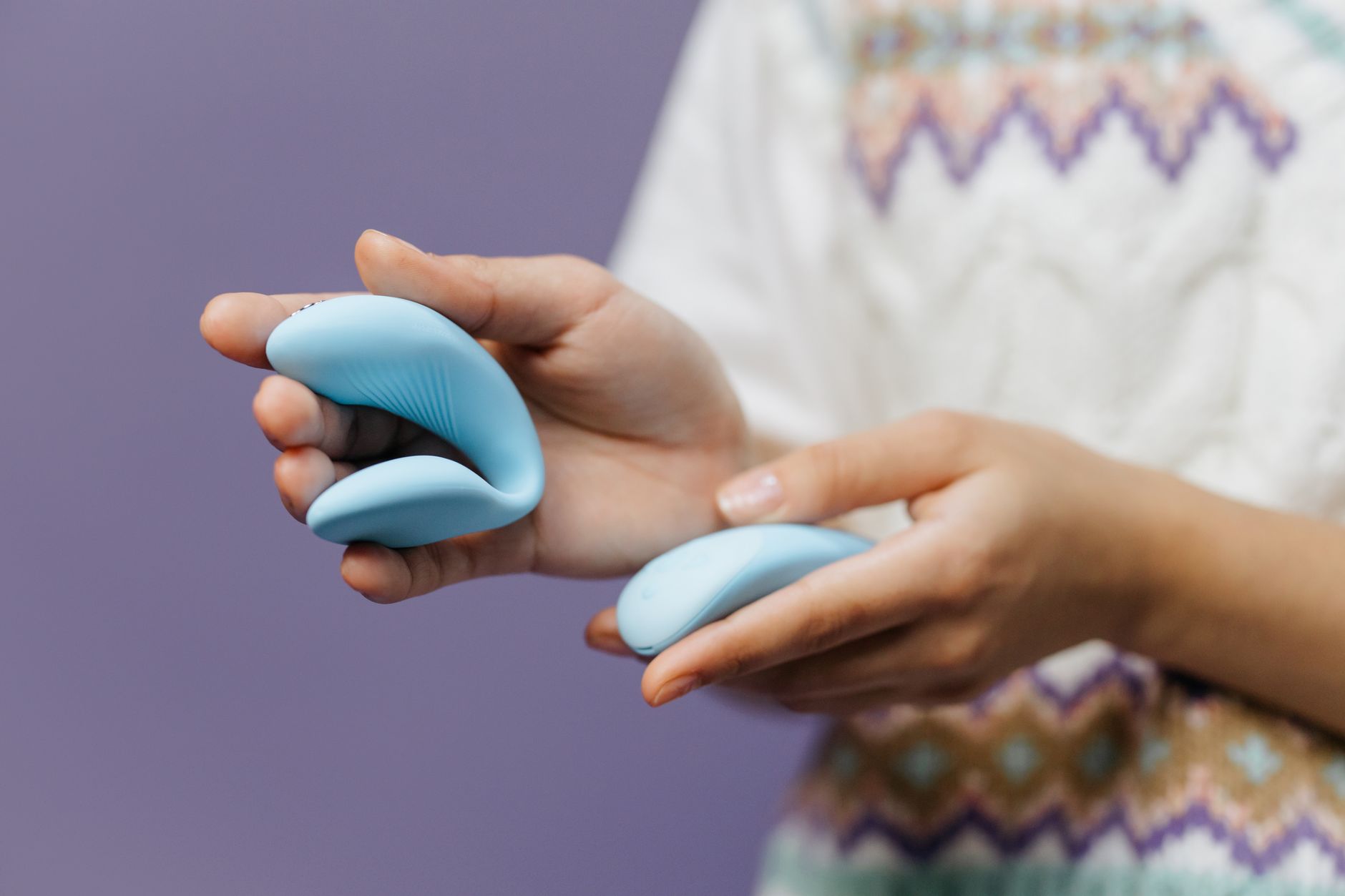
The Lem Vibrator uses air-suction technology. This matters specifically when sensation feels different. Instead of relying on traditional vibration, which requires consistent friction against increasingly delicate tissue, suction gently pulls and releases. It's a completely different sensory pathway.
For aging bodies, this shift is often transformative. Why? Because suction-based stimulation:n
Does NOT require the same mechanical pressure as traditional vibration, which can feel abrasive on thinner tissue
Engages deeper nerve structures, sometimes creating sensation that feels fresher and more novel than what vibration alone offers
Works beautifully at lower intensity settings, so you're not forced to choose between "nothing" and "too much"
Allows you to build arousal gradually, which aligns with how your nervous system now prefers to work
Many people report that air-suction devices like the Lem feel more intuitive as sensation shifts, not less.
Here's the friction you need to eliminate: thinking that slower arousal is a problem. It's not. It's information.
Your body at 55 isn't dysfunctional at 25. It's different. Arousal now takes 20-30 minutes instead of 5. That's your nervous system asking for more space, more attention, more foreplay. Honor that.
Start with sensation that has nothing to do with the clitoris yet. Skin contact. Massage. Kissing. Let blood flow gradually redistribute to your genitals. This isn't punishment for aging. This is precision. You're calibrating your nervous system before you add a vibrator.
When you do introduce the Lem, start at the lowest intensity setting. Pattern 1 or 2. Spend a full 5-10 minutes there, even if it feels too gentle. Let your body remember what sensitivity feels like at this lower threshold. You can always increase intensity. You can't undo overstimulation mid-session.
This isn't a shameful secret. Water-based lubricant isn't a crutch for your aging body. It's a tool that makes pleasure accessible.
Tissue thins with age. That's structural reality. Adding lubrication isn't admitting defeat. It's removing a barrier that has nothing to do with your actual capacity for sensation.
I recommend silicone-free, water-based lube. Silicone-based lubes feel luxurious but can degrade silicone toys over time. (The Lem is silicone, so water-based is the right call.) Reapply as needed during longer sessions.
One client told me that once she stopped thinking of lube as "emergency intervention" and started thinking of it as "baseline support," her pleasure doubled. Because she wasn't tensing up against the idea of dryness. She was present.
Your pelvic floor weakens slightly with age and hormonal change. This is real and solvable, not a tragedy.
Kegel exercises get recommended constantly, and they're useful. But equally important is learning to relax your pelvic floor fully. Many people who've been tensing for decades have forgotten what full release feels like. If you're tightening your pelvic floor during arousal out of habit (not sensation), you're actually blocking your own orgasm.
Softening the pelvic floor intentionally during pleasure is often more valuable than strengthening it. Breathe slowly. On the exhale, consciously release the muscles around your vagina and clitoris. It feels strange the first few times. Then it becomes revelatory.
If you're experiencing pain or significant pressure changes, talk to a pelvic floor physical therapist. That's specialized territory and worth professional input.
Here's what I see in my practice repeatedly: people assume aging bodies are deficient. So they approach pleasure defensively, assuming it will disappoint.
Then something unexpected happens. They discover that without the cognitive load of fertility concerns, without the performance pressure they carried for decades, without the distraction of managing someone else's timeline, pleasure actually deepens.
Many of my clients in their 50s and 60s report that orgasms feel different now. Sometimes stronger, sometimes more diffuse, sometimes longer. Not worse. Different. And once they stop comparing the sensation to memory, they realize it's often richer.
Your clitoris has decades of experience now. Your brain knows what you actually like. You've stopped performing for anyone else. The question isn't whether you can still feel pleasure. It's whether you're willing to explore what it looks like now.
If you're with a partner, the conversation shifts. "I'm aging and sensation is changing" is not the same as "I'm not interested." Separate those threads.
Your partner's touch might need to be firmer now, or lighter, or paced differently. That's data, not rejection. Tell them. Show them where and how. Use the Lem together so they see exactly what works for your body now.
Many couples who integrate clitoral vibrators later in life report that it actually synchronizes them. Instead of guessing, there's clarity. Instead of performance pressure, there's collaboration.
Pain during sex is not a normal part of aging. If penetration or clitoral stimulation causes discomfort, talk to a gynecologist, ideally one trained in sexual medicine. Genitourinary syndrome of menopause (GSM) is common and highly treatable. Topical estrogen creams work quickly. Oral medications are options. This is not a "live with it" situation.
Yes. Orgasm capacity doesn't expire. Your nervous system is fully intact. The pathway to orgasm shifts: it often takes longer to build, requires different stimulation, and may feel different physically. But the experience of orgasm? Still available to you. Many people have their first powerful orgasm in their 60s because they finally stopped performing and started paying attention.
No. Decreased sensation is a normal structural change, not pathology. Tissue thins, blood flow shifts slightly, hormones change. These are expected aging processes. What matters is finding tools and approaches that align with your changing body. The Lem works specifically because air-suction technology engages sensation differently than traditional vibration, often making it feel fresher and more effective as you age.
No. Lubrication is a tool, not a sign of malfunction. Your body produces less natural lubrication with age due to hormonal changes and decreased cellular hydration. Adding external lubrication removes friction without changing your actual capacity for pleasure. Think of it like reading glasses. You're not weaker if you need them. You're simply being practical.
There's no "should." Build 20-30 minutes into your timeline if possible. Slower arousal isn't a bug. It's an invitation to foreplay, to presence, to letting your nervous system gradually shift into pleasure mode. This often creates deeper satisfaction than rushing.
Absolutely. The Lem's air-suction technology creates sensation through a different mechanism than traditional vibrators. Many people with reduced sensitivity find that suction-based stimulation engages nerve pathways that standard vibration doesn't reach. Start at low intensity and give your body time to adjust. Sensitivity often returns when you stop forcing it.
Completely normal. Some people experience longer, more full-body sensations. Others notice more focused intensity. Some feel waves instead of peaks. None of these variations are worse or better than what you experienced before. They're just different. The goal is presence, not comparison to a 25-year-old version of yourself.
Your body has aged. That's the only certainty here. Everything else is a choice about how you respond.
You can spend energy mourning what's different. Or you can spend it exploring what's possible. You can avoid pleasure because sensation feels unfamiliar. Or you can show up with curiosity and a lemon clitoral vibrator that's actually designed for how your body works now.
Aging isn't the opposite of desire. In many ways, it's the precondition for it. Because for the first time, you know exactly who you are, what you actually like, and you don't need permission from anyone else to pursue it.
If questions come up as you explore, my team is here. Reach out anytime at /contact.