
How to Use a Lemon Vibrator With a New Partner Without Awkward Conversations
Here's what I hear most often from people starting new relationships: "I want to introduce a vibrator, but I don't want them to feel like they're not enough." That fear is almost universal. And it's based on a misunderstanding about what vibrators actually do in partnered sex.
A lemon clitoral vibrator isn't a referendum on your partner's performance. It's an expansion tool. It tells your new partner, "Here's something that makes me feel good, and I want you to be part of exploring it with me." The problem is knowing how to say that without it landing sideways.
I'm going to walk you through the exact timing, framing, and conversation starters that work. This applies whether you use The Lem or any clitoral vibrator. It's about the communication, not the device.
Why new relationships are actually the right time
Countintuitive, right? But early-stage relationships are actually easier territory than long-term partnerships. Here's why: you're both still in curiosity mode. You haven't built defensive patterns yet. You're already having conversations about what you like, what works, what you want to explore.
Introducing a vibrator six months in feels riskier because of how it lands in a longer narrative. But in the first few weeks or months, it's just another data point about who you are.
The window is roughly 2-4 weeks in. Early enough that it's not a surprise pivot in someone's perception of you, but late enough that there's actual comfort and communication happening. If you're sleeping together regularly by then, the timing is right.
The frame that actually works
Forget "I want to try something." That's vague and creates anxiety. Forget apologies or excessive explaining. That signals shame, which your partner will absorb.
Instead: "I love sex with you. I also know what my body responds to, and I want to share that with you. There's this thing I use that feels really good, and I'd like to explore it together."
Notice what that does. It centers him or her (or them) as part of the experience, not as a replacement. It frames the vibrator as self-knowledge, not self-doubt. It makes it collaborative.
Then stop talking. Give space for questions.
The "show, don't tell" approach
Some people respond better to seeing it in context than hearing about it in the abstract. If you've established comfort and play, you can introduce it during sex rather than in a planning conversation.
You might say: "I want to add something that's going to feel amazing." Take out The Lem or whichever lemon clitoral vibrator you use. Show them. "This stimulates me in a specific way. Would you be interested in using it together?"
Many partners find this easier than theoretical conversations. They're already in a pleasure headspace, aroused, and less defensive. The vibrator becomes a practical tool in the moment, not a symbol.
The conversation starters that bypass weirdness
These are actual openers that work in my practice:
"I've been thinking about what makes me feel best sexually, and I know I respond to this kind of stimulation." This is ownership. It's not "I need something else." It's "Here's my preference."
"I like the idea of us finding new things together." This is collaborative framing. It makes the vibrator an experiment you're doing as a team.
"Have you ever used toys with a partner before? I'm curious what that's been like for you." This opens dialogue without pitching. You learn what he or she knows, what fears might exist, what language resonates with them.
"When I use this, I actually come faster, which means more time for other stuff." This is practical and benefit-focused. It reframes the tool as something that makes the whole experience better.
What to do if they freeze up
Some partners will have an immediate defensive reaction. "Am I not enough?" or "You don't like how I touch you?" This isn't actually about the vibrator. It's about insecurity or unfamiliarity.
Don't defend the vibrator. Defend the relationship. "I love how you touch me. This isn't about that. This is about what my body needs, and I want you involved in that, not shut out from it."
Then offer a specific role. "I'd love for you to hold it" or "It's hot when you watch me" or "I want you inside me while I use this." This keeps him or her engaged and central to the pleasure, not sidelined by a device.
The mechanics of actual use
Once you've had the conversation, timing matters. Don't whip out The Lem on the first attempt and expect it to feel natural. Introduce it when you're already aroused, when there's momentum and comfort.
Your partner doesn't need to do much. If you use a lemon clitoral vibrator like The Lem, most of the control stays with you. You're positioned how you want, you're holding it or directing it. Your partner can focus on penetration, kissing, touch, being present.
For some couples, the partner holding the vibrator becomes incredibly hot. For others, it works best when you're controlling it yourself. Talk about what feels right during the actual sex, not just in planning.
Managing expectations
Neither of you should expect this to be transcendent the first time. You're coordinating three things: a new tool, a new partner, and existing habits your body has. That's a lot.
The first time might feel clumsy or not hit the right angle. That's normal. The second or third time is usually better because you both understand the mechanics and there's less mental load on whether it's "working."
Give it permission to be awkward. That's actually part of the bonding.
The long-term angle
What you're really doing when you introduce a lemon vibrator early is setting a pattern. You're saying, "In this relationship, we talk about what works, we're curious, we're willing to try things." That becomes the baseline for how you handle communication around pleasure for years.
Partners who can introduce a clitoral vibrator without shame are usually the ones who can also say, "Can we try a different position?" or "I need more foreplay" or "This hurts, let's adjust." It's all the same skill: self-knowledge, communication, collaboration.
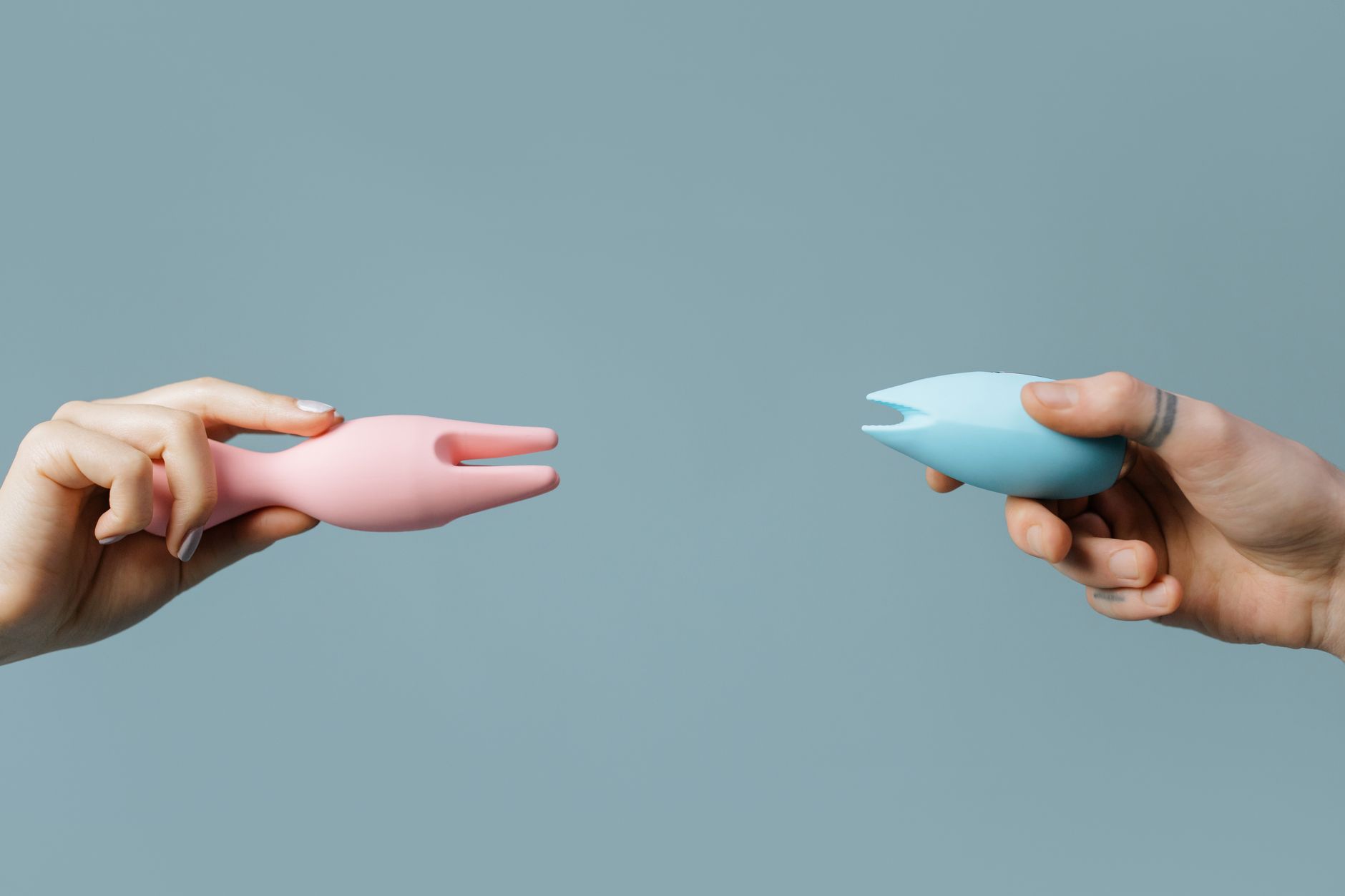
Photo by cottonbro studio on Pexels
The partner who "gets it" immediately
Some partners respond with curiosity and enthusiasm right away. They're not threatened. They're engaged. If that's your person, lean into it. Let him or her explore with you. Some partners love holding The Lem, watching your face, learning what intensity you prefer, being part of the discovery.
These partnerships often become more intimate, not less, because you've opened a door to honest conversation about pleasure. You've modeled vulnerability and self-advocacy.
When to hold back for now
If your new partner is showing genuine fear, discomfort, or resentment about the vibrator, that's information. Not a dealbreaker necessarily, but information worth taking seriously.
Some people have been conditioned to feel threatened by toys. Some have religious or cultural beliefs that make it complicated. Some have had bad experiences in past relationships with this exact conversation.
In those cases, you don't need to force it. You can say, "This matters to me eventually. I'd like us to figure this out together." Then give it time and potentially seek couples support, especially if you're considering this relationship long-term.
But for most new partners, a simple, confident introduction followed by actual use feels entirely normal. Because it is.
FAQ
How early is too early to mention a vibrator?
Wait until you've established physical intimacy and basic comfort, usually 2-4 weeks in. Mentioning it before you're sleeping together creates unnecessary weirdness.
What if I'm shy about talking about this stuff?
You don't have to be eloquent. "Hey, I use a vibrator and I think it would be fun to try together" is enough. Confidence comes from knowing what you want, not from how smoothly you say it.
Should I let them see it before we try it?
Totally up to you, but yes, it can help. Showing The Lem or another lemon clitoral vibrator in the light, explaining how it works, answering questions, demystifies it. Less mysterious thing feels less threatening.
What if they want to use it on me but it doesn't feel right?
That's fine. "I think I like having control of this one, but I love the idea of you doing X instead." You can redirect to something that does feel good.
How do I know if it's going to be a dealbreaker for them?
You don't until you mention it. But partners who are fundamentally incompatible with your sexual needs usually show other signs early: poor communication, rigidity, shame around pleasure. A vibrator reveals the pattern but doesn't create it.
Can we use a lemon vibrator if we've been together less than a month?
Yes, if you're already intimate and the conversation feels natural. The timeline matters less than the comfort level and openness of both partners.
The takeaway
Introducing a lemon vibrator to a new partner isn't a relationship test, even though it might feel like one. It's an opportunity to establish that you can talk about pleasure, that you know what you want, and that you see your partner as collaborative rather than competitive.
Most people respond better to confidence and clarity than to hedging and apologies. You deserve pleasure. Your partner deserves to know what that looks like. A vibrator is just the practical tool that makes that conversation tangible.
If you're looking for more on how couples can navigate this terrain together, check out How to Use a Lemon Vibrator When Your Partner Has Never Seen One Before for deeper troubleshooting. And if communication itself feels hard in your new relationship, How to Use a Lemon Vibrator When Communication With Your Partner Feels Difficult walks through repair strategies.
Your pleasure matters. Your communication matters. And your new partner probably wants to get this right as much as you do. Give him or her that chance.