You're lying next to your partner and your nervous system is doing laps. Not from arousal. From a running commentary about how your body looks, sounds, moves, responds. The self-doubt is so loud that actual pleasure can't get a word in. By the time physical sensation reaches your brain, it's competing with a highlight reel of every insecurity you've ever had.
Here's the neurophysiology: arousal requires your parasympathetic nervous system (rest and digest) to be in charge. Shame activates your sympathetic nervous system (fight, flight, freeze). These two systems cannot run simultaneously. When you're worried about how you look or sound, your body literally cannot access full pleasure. Your muscles tense, your breathing gets shallow, your clitoris actually becomes less responsive.
In couples therapy, I see this pattern constantly. A partner will say, "She seems distant," or "He pulls back when things get intimate." When we dig into it, nine times out of ten, the person pulling back is running a loop of body criticism that has nothing to do with their partner. It's a solo performance happening in their own mind.
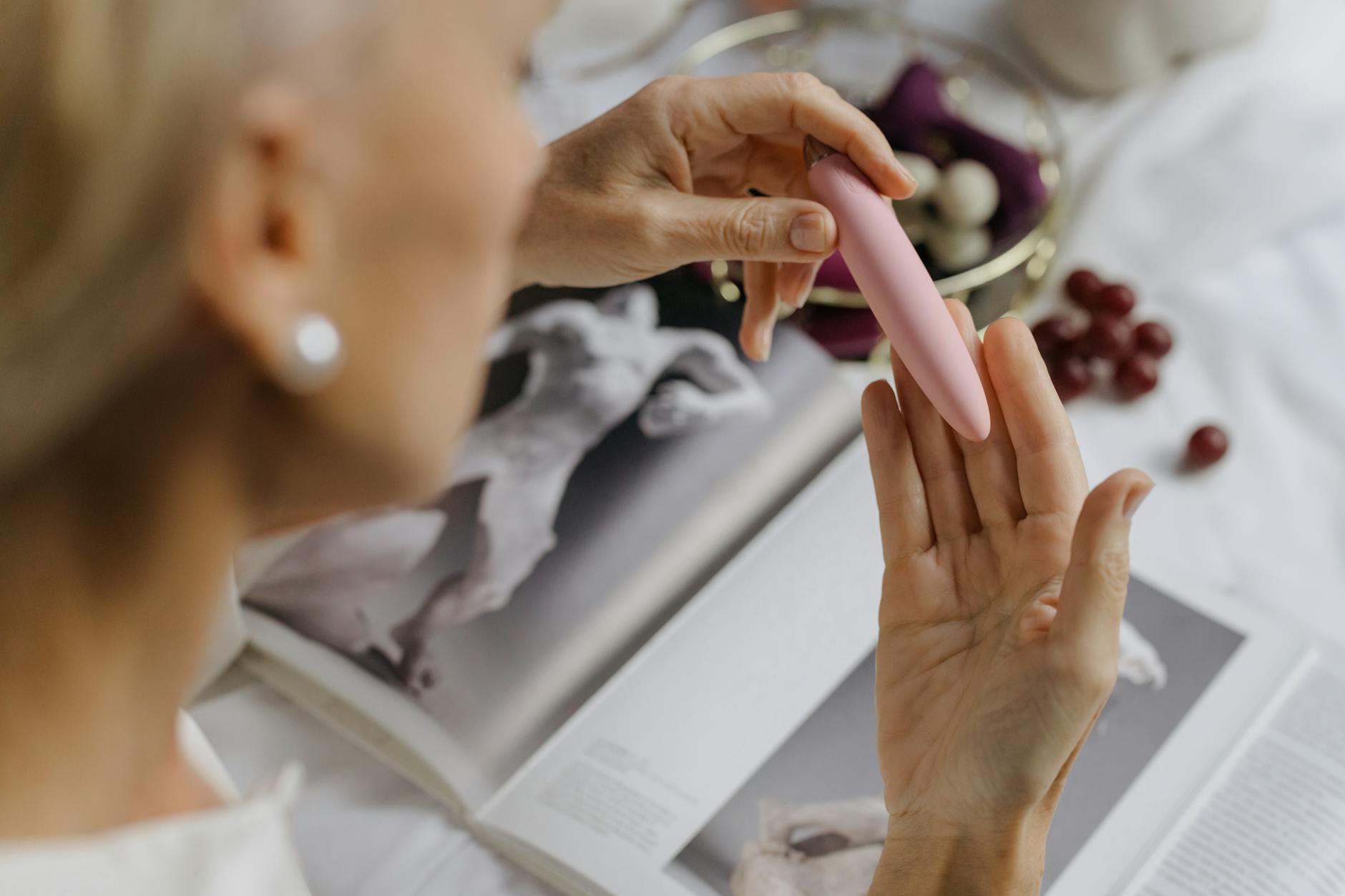
The good news: a lemon vibrator can interrupt that loop. Not by magical thinking, but by anchoring your attention to physical sensation so insistently that the shame narrative has to move over.
The Lem Vibrator and similar lemon sucker-style devices work through air-pulse technology rather than traditional vibration. This means they stimulate your clitoris through gentle suction patterns that create a chain reaction in your nervous system. Your brain gets flooded with sensory input.
Here's why that matters for self-consciousness: your brain has limited bandwidth. When the suction pattern is rhythmic and focused, it demands your attention. The shame narrative doesn't vanish, but it gets crowded out by "oh, that's interesting," or "wait, I feel that." Over time, this practice rewires your default. You learn that you can stay present in your body even when your partner is there.
Stage one: solo practice first. This sounds obvious, but I need to say it because most people skip it. Before you introduce a lemon clitoral vibrator into partnered sex, use it alone. Multiple times. The goal isn't to "learn" it technically. The goal is to build a felt sense of what it feels like when you're fully present in your body without anyone watching.
When you're alone, your nervous system relaxes. You can actually feel pleasure without the guard dog of shame running interference. This matters because your body remembers it. You're creating a neural pathway: "I can feel good without performing." Later, when your partner is present, your nervous system has a reference point.
Stage two: external presence, internal focus. When you're ready to use a lemon vibrator with your partner, position yourself so you can still maintain focus on sensation. If you're lying on your back, maybe a pillow props you at an angle where you can see your partner without making eye contact, which can snap you back into "am I doing this right" mode. Some people find that closing their eyes helps, though that's not universal.
Tell your partner one true thing: "I'm going to use this to help me stay present." You don't need a whole therapy session about body image. Just a clear boundary that says: this is for my nervous system, not a performance.
Stage three: let sensation lead. Once the Lem is running, your one job is to notice what you feel. Not "does my partner like this," not "am I taking too long," not "does my body look weird right now." Just: where do I feel this? Is it getting more intense? Do I want to shift angle slightly?
This sounds stupidly simple, but it's radically different from how self-conscious people usually operate during sex. You're not narrating yourself. You're just observing your own sensations like a curious bystander.
If you're using a lemon clitoral vibrator with someone, they need to understand one thing: this isn't about them not being enough. It's about your nervous system needing a tool to access pleasure when shame is in the room.
I tell couples this directly: "When she's self-conscious, her nervous system is in a cage. The vibrator is the key. It's not about technique or desire. It's about freeing up her actual capacity to feel." Partners who get this become allies, not insecure.
What doesn't work: "Don't worry, you look great." Your partner's reassurance is sweet, but it can't override your nervous system. You need your own evidence that you can be present and desired at the same time.
After a few weeks of using a lemon vibrator in this way, something usually changes. The shame narrative doesn't disappear, but it loses its monopoly. You realize your orgasms are just as good (often better) when you're focused on sensation instead of self-judgment. Over time, your brain starts defaulting to curiosity instead of criticism.
I've had clients report that they start initiating sex more because it's not as much work anymore. When you're not managing an internal shame loop alongside external stimulation, partnered sex requires less emotional labor. It becomes something you might actually want, not something you endure while running a self-criticism track.
That shift alone changes the relationship. Your partner notices you're more relaxed. Your touch becomes less tense. Honestly, everything improves when someone stops fighting their own nervous system.
Eventually, the goal is for you to be able to access presence without needing the tool every single time. But that doesn't happen through willpower. It happens through practice. Every time you use a lemon vibrator and stay focused on sensation instead of shame, you're literally strengthening the neural pathways that support pleasure and presence.
Some people will use a clitoral vibrator every time they have partnered sex. Others will find they need it less frequently as their nervous system learns the pattern. There's no wrong answer. This is maintenance for your pleasure, same as anything else.
If body shame is something you've been hiding from your partner, starting here is gentler than a big confession. You can simply say: "I want to try using a vibrator. I think it'll help me be more present with you." That's the truth, and it requires zero vulnerability about the shame part. Your partner gets to understand it's about connection without needing you to diagnose your own nervous system struggles.
If your partner has used lemon sexual toys before or has mentioned vibrators casually, this is an easy conversation opener. "I've been thinking about trying the Lem. Want to explore that together?" These conversations tend to be less fraught than people expect.
Why does a vibrator help with self-consciousness when nothing else does?
Because your brain can't think about two things at once at the same intensity. When sensory input is strong and rhythmic, it becomes the primary focus. That's not distraction. That's redirection of your nervous system's attention toward pleasure instead of toward shame. The vibration (or suction, in the case of lemon clitoral vibrators) creates sensory demand that crowds out the internal critic.
Will using a vibrator make my partner feel inadequate?
Only if you both interpret it that way. If you frame it as "this is a tool to help me access pleasure more fully," most secure partners will see it as collaborative. Your partner benefits too. You're more relaxed, more present, more likely to actually orgasm. That's not a loss for them. It's a win you're both sharing.
Can I use a lemon vibrator if I'm not totally sure my partner will be comfortable with it?
Start alone. Build your own relationship with the sensation. Once you know how it feels and what it does for you, the conversation with your partner becomes easier because you're speaking from experience, not from theory or insecurity. You're not asking permission. You're explaining something that's already part of your pleasure practice.
How long until body shame actually gets better?
Your nervous system can shift its baseline in as little as 3-4 weeks of consistent practice. But the depth of change keeps unfolding over months. Early on, you might notice you feel less tense during sex. Later, you realize you're actually initiating more. Even later, you notice you're not running the shame commentary as much in other contexts too. Nervous system healing is gradual but compounding.
Does this only work if you're in a long-term relationship?
No. You can use a lemon vibrator solo to build your confidence and nervous system resilience. That confidence carries over to partnered sex whenever it happens, with whoever it's with. In fact, solo practice is the foundation. That's where you get to be fully present without any external pressure at all.
What if I use a vibrator and still feel self-conscious?
First, check in with your nervous system: are you actually feeling pleasure, or are you performing the idea of pleasure? Sometimes self-consciousness just shifts rather than disappears. If the shame narrative is still running at full volume, you might benefit from talking to a therapist alongside the vibrator practice. A lemon clitoral vibrator is a tool, not therapy. But tools + professional support often work better together.
How does this connect to the rest of my relationship?
Body shame in sex usually doesn't exist in isolation. If you're self-conscious during partnered sex, there might be other ways you're managing yourself in that relationship. A vibrator solves the pleasure part. A relationship coach or therapist can help with the broader pattern of self-editing you're doing. Both are useful.