The thing nobody names
You're with your partner. Everything is fine, technically. But you're not really there. Your mind is cataloging the to-do list, or stuck on a conversation from three days ago, or just... floating somewhere neutral and unreachable. Your body goes through the motions while the real you watches from a distance.
That's disconnection. And it's more common than anyone admits. It's not about your partner. It's not about the sex itself. It's about presence. Something broke the thread between your body and your mind, and you don't know how to pick it back up.
Why disconnection happens (it's rarely what you think)
Disconnection during partnered sex usually looks like one of three things.
First, there's performance anxiety. You're tracking how you look, whether you're being attractive enough, whether you're taking too long to climax or not climaxing at all. Your brain is running commentary instead of sensation. The mental load is so heavy that pleasure becomes impossible.
Second, there's emotional distance that sex didn't cause but sex exposes. Resentment, unresolved conflict, or just the slow drift that happens in long-term partnerships. Sex becomes a reminder of what's missing rather than a place to find connection.
Third, there's plain old dissociation. Trauma history, stress overload, depression, anxiety. Your nervous system decides that checking out is safer than staying present. This one needs real attention and often professional support.
The good news: disconnection is almost always fixable. But it requires you to do two things at once, and this is the hard part. You have to work on presence in your own body AND communicate what's happening to your partner. Tools help. The Lem Vibrator is one of them. But the tool alone won't solve it if the conversation stays silent.
What The Lem Vibrator changes about disconnection
Here's the practical piece. Disconnection thrives in passivity. When you're receiving stimulation you didn't actively choose or initiate, it's easy to slip into observer mode. You're being done to, not participating.
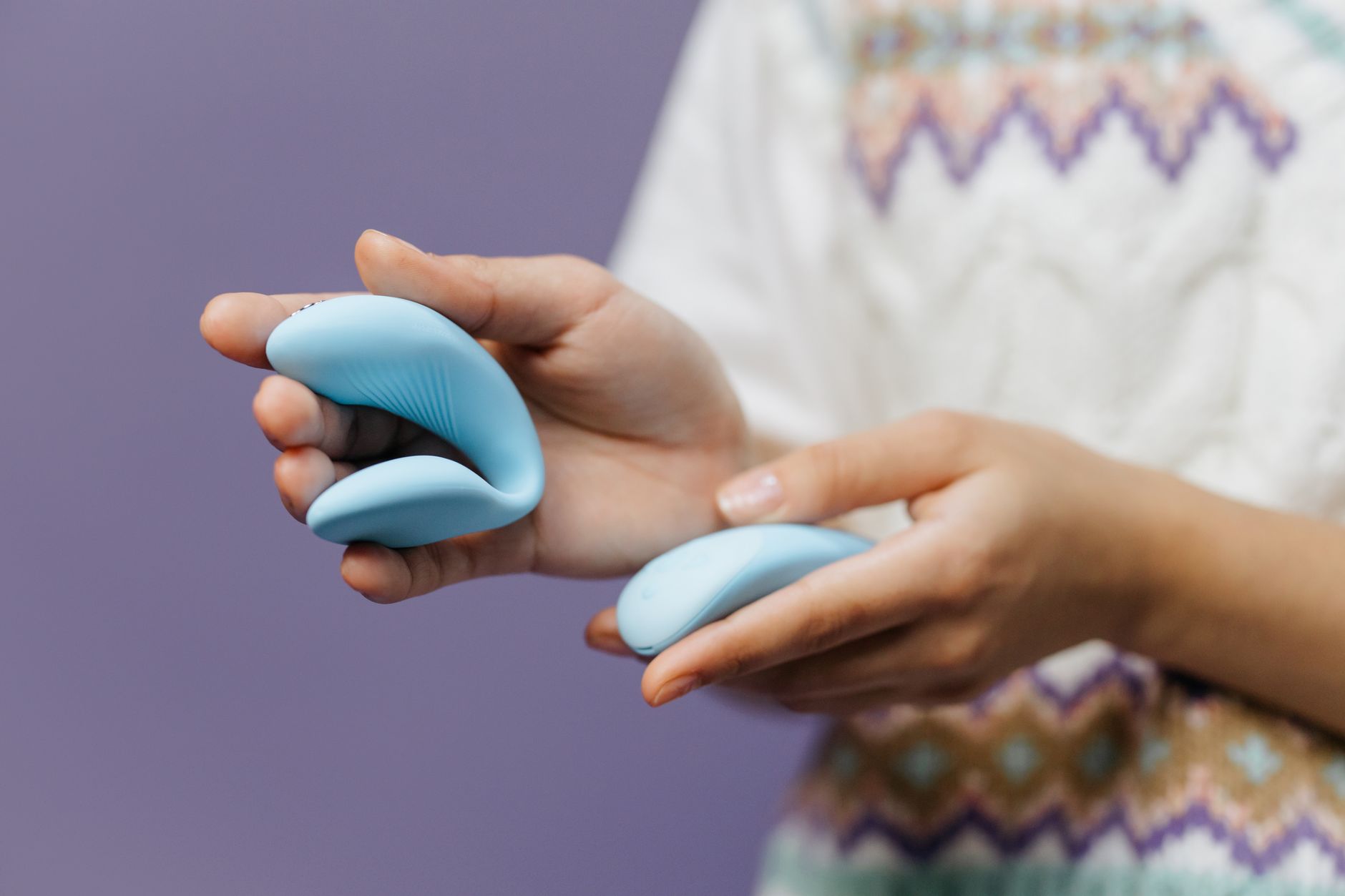
The Lem Vibrator flips that. It's so intensely focused, so directional, that using it requires active attention. You have to hold it. You have to adjust the angle. You have to choose the pattern. You have to feel where it lands and how your body responds. There's no checking out while you're operating a device that's this specific.
That active engagement is the anchor that brings you back into your body.
Many of my clients report that the act of reaching for The Lem during partnered sex is actually the first moment of real presence they feel. It's a permission slip. It's a way of saying: I'm here, I'm choosing this, I want pleasure right now. And then, because they're focused on managing the device and feeling the sensation, their mind stops its usual commentary loop.
The conversation you have to have first
Before you bring The Lem into partnered sex, you need to name what's happening. Not as criticism. Not as a referendum on your partner or the relationship. Just as information.
"I notice I check out sometimes during sex, and I don't like how that feels. I want to be more present. I've been thinking about using a vibrator, and I'm wondering if you'd be open to that."
That sentence does three things. It owns your experience without blaming. It expresses desire for something different. And it invites partnership in solving it.
His response matters. If there's resistance, dig into it separately. That's a different conversation from the one about disconnection. You might be dealing with insecurity, misalignment on pleasure priorities, or just lack of information about how vibrators work in partnered sex. Don't layer all three conversations at once. Handle the disconnection and the tool separately from the relationship dynamics.
How to actually use The Lem Vibrator when you're struggling with presence
Start with solo practice. I know that sounds obvious, but most people skip this step and go straight to partnered use. You need to know what pulls your attention back into your body without any other variables.
Find a pattern on The Lem that requires focus. Maybe it's pattern 3 or 4, where the rhythm isn't immediately predictable. Spend 10 minutes just with that sensation, noticing where your attention goes. When your mind drifts, gently bring it back to the physical feeling. This is presence practice disguised as masturbation.
Then, when you're ready for partnered sex, bring it in intentionally. You might use it before penetration to settle your nervous system into pleasure. You might use it during, with your partner inside you or beside you. You might use it after, as a reset if you notice yourself slipping away.
The key is this: use it as a tool for presence, not as a workaround for disconnection. Don't hope it will fix the problem while you avoid the conversation.
When disconnection signals something bigger
If disconnection only happens during partnered sex, you're probably looking at performance anxiety or emotional distance that can be addressed with conversation and time.
If you feel dissociated during solo sex too, or if you find yourself checking out across all kinds of situations (not just intimate ones), that's worth discussing with a therapist. Dissociation can be a trauma response or a symptom of anxiety or depression. The Lem Vibrator is wonderful and useful, but it's not a replacement for clinical support when that's what's actually needed.
The slower version: rebuilding presence over time
Disconnection doesn't usually reverse overnight. Here's what actually works.
Week one: have the conversation. Name what's happening without shame.
Week two through four: practice presence on your own. Use The Lem by yourself and practice noticing when your mind goes elsewhere. Learn to gently return focus.
Week four onward: introduce The Lem into partnered sex, but not as a performance requirement. Just as an option. Some sessions you'll use it. Some you won't. The goal is flexibility and presence, not a new rule.
Talk with your partner about what you're noticing. "When I use The Lem, I feel more here." "I notice my mind wanders less when I'm actively choosing something."
Over time, you'll find that the presence you build with the vibrator starts to carry over to sex without it. Your nervous system learns what presence feels like and starts to choose it more naturally.
The thing that actually heals disconnection
It's not the vibrator. It's the combination of three things: awareness that something's off, communication about it, and a tool that helps you practice presence. The Lem Vibrator is excellent at that last part. But if you skip the first two, you're just adding a device to disconnected sex.
Your pleasure matters. Your presence in your own experience matters. And your partner deserves to know what's really going on. Start with that truth, and then reach for the tools that help.
People also ask
How do I explain to my partner that I want to use a clitoral vibrator without hurting his feelings?
Frame it as something you want for yourself, not something missing in what he's doing. "I want to explore what makes my body feel most present" is different from "I'm not satisfied." Most partners respond well when they understand that vibrators expand pleasure rather than replace them. If he's resistant, that's worth exploring separately. Sometimes it's insecurity, sometimes it's misinformation about how toys work during partnered sex, sometimes it's a deeper incompatibility about pleasure that needs honest conversation.
Can using a lemon vibrator during sex make me more dependent on it for orgasm?
No. Vibrators don't create dependency in the clinical sense. But you might develop a preference for how they feel, which is just you learning what works best for your body. That's good information. You can still orgasm without a vibrator. You might just find you prefer not to, and that's a choice, not a problem. The Lem Vibrator is a tool you choose to use, not something that takes over your pleasure capacity.
What if using The Lem Vibrator makes me feel even more disconnected?
Stop and pay attention to that signal. Disconnection sometimes gets worse when we add stimulation on top of an already-distant nervous system. If that's happening, the vibrator isn't the solution. The first step is probably talking to a therapist about what's driving the disconnection. A vibrator amplifies pleasure and presence when those are available. It can't manufacture them if your nervous system is protecting itself through dissociation.
Is it weird to use a lemon vibrator if I'm not sure I want to have sex at all?
Not weird at all. Sometimes we need to reconnect with pleasure in a low-pressure way before partnered sex feels good. Solo use of The Lem Vibrator is a totally valid place to start. You might discover that sex with your partner feels better once you remember what your own pleasure feels like. You might also discover that you need space from sex for a while, and that's equally valid information.
How often should I use The Lem Vibrator during partnered sex to stay present?
There's no magic frequency. Some people find presence works best when they use it most of the time. Others prefer to use it occasionally, as a reset button. The goal is presence, not vibrator use. Use it as often as you need to feel anchored in your body and engaged in the experience. That might be every time, or twice a month, or somewhere in between.
What if my partner wants to use The Lem Vibrator on me but I don't like losing control?
Speak up. You can ask him to hand it to you instead, or use it together with you guiding the angle and pressure. Control over your own pleasure is part of presence. If using a vibrator only feels good when you're directing it, that's valuable information about what your body needs.
Start with what's true
Disconnection during sex isn't a moral failing. It's information. Your body and your partner deserve your presence, and the fact that you're looking for ways to get there means you're already halfway there.
Tools like The Lem Vibrator help. Conversation helps more. And patience with yourself while you rebuild presence helps most of all. You don't have to fix this alone, and you don't have to fix it today. Start honest, stay curious, and let your body lead you back.
If the disconnection persists despite conversation and tools, reach out to a therapist or counselor. That's what we're here for. Contact The Lem Vibrator if you have questions about how to introduce this tool into your intimate life.