Here's what happens to your body under chronic stress
Long-term stress is a nervous system marathon. Your body stays in a low-level fight-or-flight state, which means blood flow redirects away from your genitals and toward your muscles. Your dopamine flattens. Your cortisol stays elevated. And pleasure, which requires a parasympathetic nervous system (the relaxed one) to activate, simply doesn't register the way it used to.
This isn't a personal failing. It's biology. Your body is doing exactly what it's supposed to do when survival feels uncertain.
The problem comes when the stressor lifts. You'd think pleasure would roar back immediately. Instead, many people describe a bewildering numbness that lingers for weeks or months. Your life is calmer now, but your nervous system hasn't gotten the memo. You feel broken. You're not.
Why pleasure doesn't snap back automatically
Three things are happening at once.
First, your nervous system needs time to recalibrate. Stress creates grooves in your neurology. It takes consistent safety signals to wear new grooves. A few good weeks don't undo months of vigilance. This is why people often say pleasure "comes and goes" at first, or feels distant and abstract rather than hot and immediate.
Second, there's anticipatory anxiety. Your body learned that arousal sometimes leads to conflict, interruption, or disappointment. Even if that stressor is gone, your body doesn't trust that yet. You might feel your arousal building and then instinctively shut it down before it gets too strong.
Third, you've probably been disconnected from your body for a while. That disconnection was useful once. It let you cope. But now it's become a habit. Pleasure requires presence, and presence requires a nervous system that feels safe enough to pay attention.
The role of a clitoral vibrator during the thaw
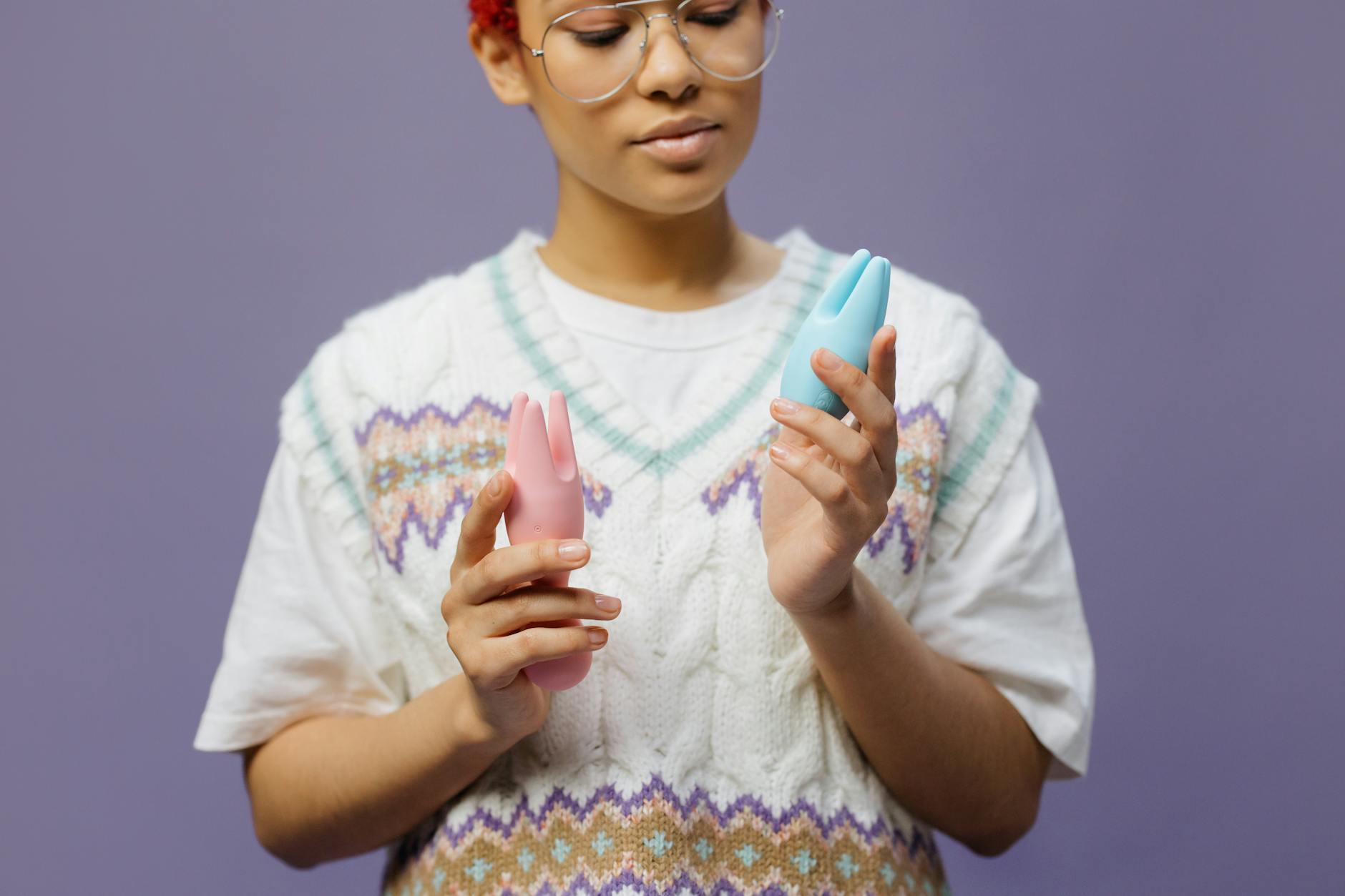
This is where a tool like the Lem Vibrator becomes genuinely valuable. Not because it fixes anything, but because it gives your nervous system something predictable and controllable to respond to.
Here's why that matters. A suction vibrator like the Lem works through a completely different mechanism than a traditional vibrator. It uses gentle air-pulse technology that stimulates the clitoral complex without the direct friction that can feel overwhelming when your nervous system is still learning to relax. The sensation is concentrated, building, and repeatable. Your body learns: this is safe, this is the same every time, this builds in a way I can anticipate.
That predictability is a nervous system reset. You're teaching your body that arousal doesn't have to come with threat.
Starting slowly (and why your first session might disappoint you)
When pleasure finally starts to return, the impulse is to dive in. Resist that. Your nervous system is still skeptical.
I recommend starting on the lowest setting (pattern 1 on the Lem) for no more than 5-10 minutes. Solo. No pressure to orgasm. The goal is not pleasure yet. The goal is sensation without overwhelm.
What you're likely to experience: maybe nothing. Maybe a faint tingling. Maybe it feels boring compared to what you remember. That's completely normal. Your nervous system is checking the safety box. It's saying, "Okay, this happened, nothing bad followed, I can relax slightly more next time."
Don't interpret flatness as permanent. The thickness of numbness doesn't usually lift all at once. It lifts in layers. Three sessions of low-intensity use might feel like almost nothing. Session four might feel different. Session seven might be genuinely pleasurable. There's no set timeline, but expecting it to happen in one session is setting yourself up for disappointment.
Managing overstimulation (the sneaky part)
Something weird happens as pleasure returns. Your nervous system, having been offline for months, suddenly becomes hypersensitive. You might find that pattern 3 on the Lem, which you're confident you'd enjoy, actually feels too intense. Your body responds with irritation or even shutdown rather than pleasure.
This isn't you being difficult. This is your nervous system recalibrating its sensitivity thresholds. When you've been numb for a while, even moderate stimulation can feel like too much.
The fix is counterintuitive: stay at a lower setting than feels intuitive. Spend two to three weeks at patterns 1-2 before moving up. Your nervous system will gradually expand its window of tolerance. Rush it, and you'll hit a ceiling where your body just stops responding.
Also track what time of day works best. Many people find that morning or midday solo sessions are more successful than evening ones, simply because your nervous system is less depleted. Experiment.
Talking to your partner about this phase
If you have a partner, they need context. "I'm using a vibrator to help my nervous system remember how to feel pleasure" is a completely different conversation than "I want better orgasms." One is about nervous system healing. The other sounds like dissatisfaction.
Most partners respond better when you're clear: "I'm rebuilding sensitivity after stress. This is about me learning my body again, not about anything you're doing or not doing. I'll let you know if I want to include you."
Many people find that involving a partner too early in this phase actually slows down the process. There's pressure. There's the impulse to perform. There's the other person's arousal to manage. All of that activates your sympathetic nervous system again. Solo sessions with a lemon vibrator first, then partnered exploration later, tends to work better.
When numbness starts to lift
You'll know it's happening because pleasure will return in moments rather than sustained stretches. You'll have one session where it actually feels good, then three where it's back to neutral. That's progress. Your nervous system is testing the waters.
As consistency builds, start experimenting with pattern transitions. Use the Lem on pattern 1 for two minutes, then move to pattern 2 for one minute, then back to 1. This helps your nervous system learn that intensity changes don't equal danger. It's training.
Also, this is when discovering what genuinely turns you on matters. Stress and disconnection narrow your aperture for arousal. As your nervous system opens back up, you might find that the content, fantasies, or scenarios that worked before don't anymore. That's fine. Let your preferences shift.
The emotional piece (which is half the work)
This is where many guides stop and shouldn't. The physical sensation is only part of pleasure returning. The other part is your mind catching up to the fact that you're actually safe now.
Some people need to grieve the time they lost to stress. Some need to process anger at the person or situation that caused the stress. Some need to consciously give themselves permission to take up space and want things again. A vibrator can't do that work. A therapist can. If you're several weeks into rebuilding sensation and it's still not clicking, that might be the missing piece.
I also encourage people to notice the moments when pleasure does return, however small. When your clitoris starts to swell during a session. When you feel anticipation before reaching for the Lem. When orgasm actually happens and surprises you. Name those moments. Your nervous system learns from attention. "Oh, pleasure is back" is a more powerful signal than any amount of effort.
FAQ
Can I use a lemon vibrator if I'm still under stress?
Yes, but manage your expectations. Vibrators don't fight stress; they work within your current nervous system state. Using a lemon clitoral vibrator while stressed is fine, but don't expect it to create pleasure that isn't there yet. Once stress levels decline, the vibrator becomes much more effective.
How long does it usually take for pleasure to return after long-term stress?
There's no standard timeline. For some people, weeks. For others, a few months. It depends on how long the stress lasted, what else is happening in your life, and how much nervous system support you're getting (therapy, rest, community). Consistency with a lower-intensity practice like using the Lem on low patterns tends to speed the process compared to sporadic or high-intensity use.
Should I use the Lem alone or with my partner?
Start alone. Your nervous system needs to learn safety without the variables of another person. Once you're having reliable pleasure sessions solo, introducing your partner can be the next phase. That said, some people find that their partner's presence actually helps after stress. You know yourself best.
What if I'm still numb after several weeks of using a lemon vibrator?
First, assess other factors. Are you sleeping enough? Is stress still present in your life? Are you using the vibrator in a pressured way ("I should feel something by now")? If the answer to all those is no, talk to a doctor or therapist. Numbness can sometimes point to hormonal changes, medication side effects, or deeper emotional blocks that a vibrator won't address. The Lem is a tool for reconnection, not a replacement for professional support.
Can my clitoris become less sensitive from using a vibrator regularly?
This is a common worry and largely a myth. What actually happens is your nervous system adapts. If you're using high patterns every day, your clitoris might become temporarily less responsive to that specific stimulation level. The fix is simple: vary your patterns, take breaks, or use lower intensities. Your sensitivity returns quickly. The clitoris is incredibly resilient.
Is using a vibrator alone while stressed a sign that something's wrong with my relationship?
Not at all. Using a lemon vibrator during a healing phase is about your nervous system, not your relationship. Many people with thriving partnerships need solo time to rebuild body connection. Solo pleasure and partnered pleasure are different experiences, and both are valuable.
You're not behind, and your body isn't broken
Pleasure after chronic stress is like learning to trust again. It's not linear. It's not fast. But it's deeply possible. A tool like the Lem Vibrator can make that rebuilding feel concrete and manageable rather than abstract and impossible. You're not trying to feel amazing. You're teaching your nervous system that it's safe to feel at all. That's already enough.
If this resonates and you're navigating relationship-level stress alongside nervous system healing, reach out. Reconnecting with pleasure is part of reconnecting with yourself.