Here's the thing about dissociation during sex: it doesn't mean you're broken, and it doesn't mean you don't want pleasure. It means your brain has learned to protect itself by stepping outside your body when things feel too vulnerable, too exposed, or too much.
You might call it "zoning out," "floating above yourself," or "watching from the outside." Your partner's touching you, things are happening, but you're not really there. It's like watching yourself in a movie instead of living the scene. And the cruelest part? The more you try to force yourself to be present, the further away you drift.
Dissociation during sex often roots in past trauma, anxiety, chronic stress, or sometimes just a nervous system that's been running in overdrive for too long. Your body's learned that stepping away feels safer than staying. The good news is that your nervous system can learn something different.
Most vibrators rely on friction and intensity to trigger orgasm. That approach can actually deepen dissociation because it asks your body to respond to external force rather than internal sensation. You're still somewhat passive, still somewhat outside yourself.
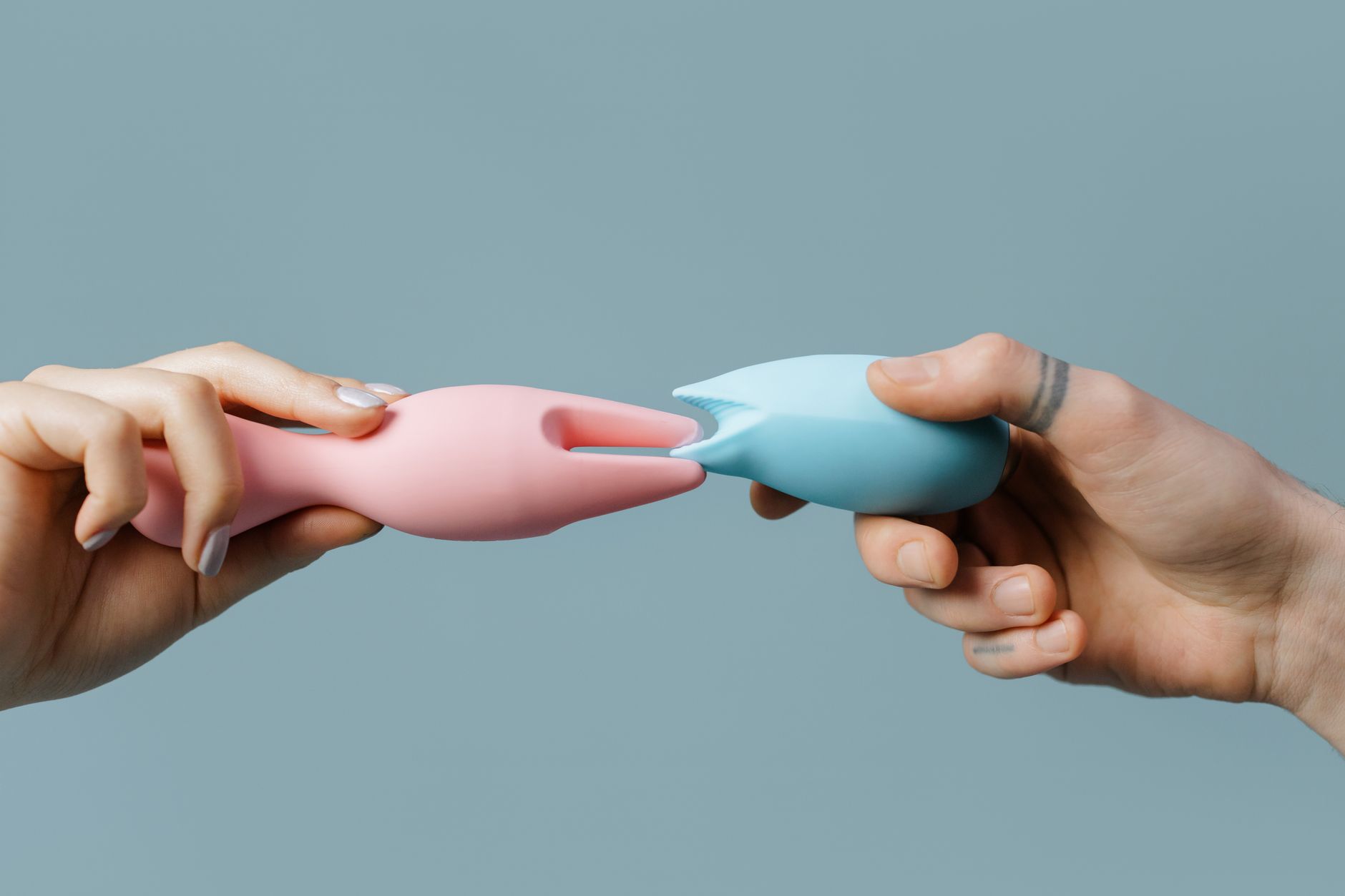
Lemon vibrators, especially air-suction clitoral vibrators like The Lem, work differently. Instead of buzzing or rumbling, they create gentle pulses of suction that stimulate the thousands of nerve endings in and around your clitoris. That sensation is immediate, direct, and genuinely novel. Your brain can't autopilot through it because it's not a sensation your body has learned to ignore.
When your nervous system encounters something unexpected and safe, it wakes up. Presence returns.
If you're prone to dissociation, high-intensity vibration can actually trigger more of it. Your body interprets overwhelming sensation as a threat and retreats further. So the first rule is counterintuitive: start with the lowest setting and stay there for a while.
The Lem has multiple intensity levels. Use level one or two for the first few sessions, even if it feels almost too gentle. Your job isn't to chase an orgasm. Your job is to wake up your nervous system to a new type of sensation and prove to your brain that staying present is safe.
This can take longer than you expect. That's not failure. That's retraining.
Dissociation thrives in silence and stillness. When you're using a lemon clitoral vibrator, anchor yourself in your body through two simple practices.
First, breathe consciously. Not meditation breathing, not anything fancy. Just notice your breath. When you feel the urge to drift, pause the vibrator and take three deep breaths. The rhythm of breathing tethers your nervous system to the present moment. It tells your brain: I'm safe, I'm still here.
Second, use grounding touch. While using The Lem, place your other hand on your thigh, your belly, or your chest. Feel the temperature of your own skin. Notice texture. This isn't erotic; it's sensory feedback that says you inhabit your body. Many people find that this dual sensation, internal (the vibrator) and external (their own touch), keeps them anchored.
If you're exploring lemon vibrators with a partner, their job isn't to make you stay present. Their job is to create safety so your nervous system doesn't need to leave.
Honest conversation before sex helps more than during. Tell them: "Sometimes I zone out. It's not about you or what you're doing. It's about me. If I seem distant, I might need you to just pause and let me catch up." That permission alone, weirdly, makes dissociation less likely.
If you're using The Lem solo, you have complete control, which is actually the ideal starting point. No pressure to respond a certain way, no worry about someone else's timeline.
Many people use fantasy as a dissociation tool without realizing it. You're lying there, mind somewhere else entirely (a scenario, a person, a memory), and your body is somewhere else too. The vibrator becomes background noise to the real action happening in your head.
If that's you, try the opposite for a while: stay in the room. No fantasy. Just sensation. Just this body, this moment, this device doing its work on your clitoris.
It might feel boring at first. Boring is actually good. Boring means your brain isn't running a protective story. Boring means you're present. Over time, pleasure without dissociation actually deepens in ways that escaped fantasy rarely does.
As your nervous system learns to stay present, you'll start feeling things you might have missed before. The pulse of suction might feel warm one moment and cool the next. The skin around your clitoris might feel more sensitive, more alive. You might notice tingling, throbbing, or a pleasant heaviness in your pelvis.
These sensations are your body waking up. Pay attention to them without judgment. This is what embodied pleasure actually feels like, and it's probably unfamiliar if you've spent years dissociating.
Some people need 5-10 sessions before they notice a real shift. Others feel it immediately. Your timeline is yours.
If your dissociation roots in past sexual trauma, be especially gentle with yourself. You're not just learning a new sensation; you're teaching your nervous system that pleasure can be safe and yours alone.
Start with scheduled, short sessions. Ten minutes, twice a week. Let your body know what's coming so there are no surprises. You might want to light a candle, close a door, create a sense of control over your environment. These aren't luxuries; they're tools for safety.
If at any point during a session you feel triggered or unsafe, stop immediately. This isn't quitting. This is honoring what your body is telling you. Your nervous system needs to learn that it can say no, and that no will be respected. That's how trust rebuilds.
A lemon clitoral vibrator works even better when paired with other embodiment practices. Consider:
Progressive muscle relaxation. Before using The Lem, spend a few minutes deliberately tensing and releasing each muscle group from your toes to your head. This teaches your nervous system the difference between tense (dissociated) and relaxed (present).
Temperature play. Hold an ice cube against your skin for a few seconds, then warm your body under a blanket. The contrast wakes up your nervous system and makes dissociation harder.
Movement. If you feel yourself drifting during pleasure, pause and do a few body rolls, stretch your hips, or shake your limbs gently. Motion keeps you present.
If dissociation during sex is severe or rooted in trauma, a therapist trained in somatic experiencing or trauma-informed therapy can accelerate your healing. You don't need to choose between therapy and exploring pleasure with tools like lemon vibrators; they work together beautifully.
A good therapist helps your nervous system feel safe in your body. A lemon clitoral vibrator gives that nervous system proof that pleasure without escape is possible.
The point of rebuilding presence isn't to achieve some perfect orgasm or prove that you're "fixed." The point is to reclaim your right to feel your own pleasure. To stay in your body. To know that you can experience sensation without your brain needing to protect you by leaving.
Over weeks and months of gentle, patient use, your nervous system learns that staying present doesn't have to hurt. That your body is safe. That pleasure can belong to you without dissociation as the price of entry.
Not always. Dissociation can stem from trauma, yes, but also from chronic anxiety, depression, stress, relationship rupture, or simply a nervous system that's learned to protect itself through spacing out. Some people dissociate during sex due to medication side effects or hormonal changes. It's worth exploring with a therapist, but the presence of dissociation doesn't automatically mean past trauma.
Some people can, but the orgasm often feels hollow or distant. You might experience the physical contraction without the pleasure, like your body's having the experience while you watch from above. This is why rebuilding presence matters so much. The same clitoral vibrator that got you to orgasm while dissociated can feel wildly different and much more satisfying once you're embodied.
There's no universal timeline. Some people notice improvement in a few weeks with consistent practice and support. Others need months. The key is consistency and gentleness, not speed. Your nervous system healed itself through dissociation as a protective mechanism; it will rewire at its own pace when it feels safe doing so.
Often, yes. The novel sensation of air-suction clitoral vibration can wake up nerves that have been numbed by medication, hormones, or years of ineffective stimulation. But if you've never felt pleasure and dissociation is also present, it's worth combining vibrator exploration with professional support. A therapist and a good clitoral vibrator can work together beautifully.
Absolutely. Frustration is actually a sign you're trying, and trying means your nervous system is working. The goal isn't to force presence through willpower; it's to create conditions where your nervous system naturally wants to stay. That happens through safety, novelty, and permission. If frustration comes up, pause, breathe, and come back later.
A partner can absolutely support you by creating safety and understanding your nervous system's needs. But the initial rebuilding often works best solo, where you have total control and zero pressure. Once you've rebuilt presence alone, bringing a partner into that space becomes a deepening rather than a starting point.
Here's what I want you to remember: dissociation isn't a character flaw or a body problem. It's a nervous system doing exactly what it learned to do. And nervous systems can learn new things. Your nervous system can learn that your body is a place worth inhabiting. That pleasure can be safe. That staying present doesn't have to hurt.
A lemon vibrator like The Lem is a tool for that learning. Start slow, stay gentle, breathe, and trust your own timeline. Your body knows how to come home to itself. Sometimes it just needs the right combination of safety, sensation, and patience to find the way back.