Let's talk about what happens down there after you give birth
Honestly, nobody warns you that your clitoris might feel like it belongs to a stranger. Postpartum bodies shift in ways that catch most people off guard. The tissues swell, hormone levels tank, and sensation becomes unpredictable. Some people describe it as hypersensitivity. Others say it feels numb. Most experience both, sometimes in the same week.
This is real. It's temporary. And it absolutely changes how you'll use a lemon vibrator during recovery.
Why postpartum sensitivity feels different
Two things happen after childbirth that matter for pleasure. First, prolactin levels spike if you're breastfeeding, which suppresses estrogen and creates hormonal conditions similar to menopause. Your tissue becomes thinner and more delicate. Second, the entire pelvic floor has been through trauma, even with an uncomplicated vaginal birth. Cesarean delivery trades one kind of trauma for another. Either way, nerve endings are irritated and swollen.
The clitoris itself doesn't change structurally. But it's sitting inside an inflamed neighborhood. That peripheral swelling makes direct stimulation feel too intense, too sharp, or sometimes completely numb depending on the day.
Most people aren't ready for partnered sex or solo pleasure until six to eight weeks postpartum, and that timeline extends if you experienced tearing, an episiotomy, or surgical delivery. But when you are ready, using a lemon clitoral vibrator isn't off the table. You just need to be strategic about intensity.
Starting with the lowest settings first
If you're using The Lem Vibrator, begin exclusively on patterns 1 and 2. These are suction-based patterns, not vibration, which means they stimulate through gentle pressure rather than rapid movement. For postpartum bodies, suction feels less sharp than traditional vibration.
Pattern 1 is where most people start. It's rhythmic, slow, and mimics oral sex in the gentlest possible way. Spend at least three sessions here. Your sensitivity will likely decrease over one to two weeks as swelling subsides.
Don't rush to pattern 2. The urge to explore higher settings is real, but pushing too fast creates microscopic tissue damage that extends your recovery. It's not dramatic. You won't bleed or experience obvious pain. But you'll feel rawer tomorrow, and healing stalls.
Why lubrication matters more now than ever
Postpartum hormone shifts dry out tissue in the same way menopause does. Even if you're not breastfeeding, estrogen is lower than baseline. Vaginal and clitoral tissue is thinner and more prone to friction irritation.
Use a water-based lubricant every single time, even though it feels redundant. I recommend applying it directly to the Lem's opening, then waiting 30 seconds before turning it on. This creates a moisture barrier that reduces the sensation of suction pulling on already-sensitive tissue. It sounds counterintuitive, but that light layer of lube actually makes everything feel softer and less abrasive.
If lube stings or causes irritation, switch brands. Some water-based lubes contain glycerin or other ingredients that irritate postpartum tissues. Plain, glycerin-free options like Sliquid or Hyalo Gyn work better for this recovery window.
The timing question: when is it actually safe?
Most practitioners clear people for sex around six weeks postpartum, assuming no complications. But "cleared for sex" doesn't mean "ready for full sensation." Those are different things.
If you had significant tearing, episiotomy, or a cesarean, add two to three weeks. If breastfeeding, expect sensitivity to persist until you introduce formula or wean. If you're on hormonal birth control, it might mask some swelling, but it won't resolve the underlying tissue thinness.
A good checkpoint: Can you insert a finger into your vagina without discomfort? If no, the clitoris is probably too tender for vibrator use. If yes, try pattern 1 for 60 seconds. If it feels tolerable, you can proceed. If it feels raw or burning, wait another week.
Trust your body's signal. There's no prize for rushing recovery.
The mental piece: postpartum sex is different
Your body changed. Your time is fragmented. Your hormones are chaotic. Your partner (if you have one) might feel like a stranger or a source of additional demand. All of this affects arousal before the vibrator even turns on.
Postpartum pleasure often requires more permission, more foreplay, and more patience with yourself than pre-baby intimacy. Using The Lem Vibrator solo first, without partner expectation, can help you reconnect with your own sensation in a low-pressure way. Many people find solo use with the Lem helps them reset their baseline before reintroducing partnered sex.
Set a realistic window. Fifteen minutes total, not because pleasure needs to be rushed, but because interrupted focus is normal now. If the baby cries or your body feels fatigued, that's not failure. That's postpartum reality.
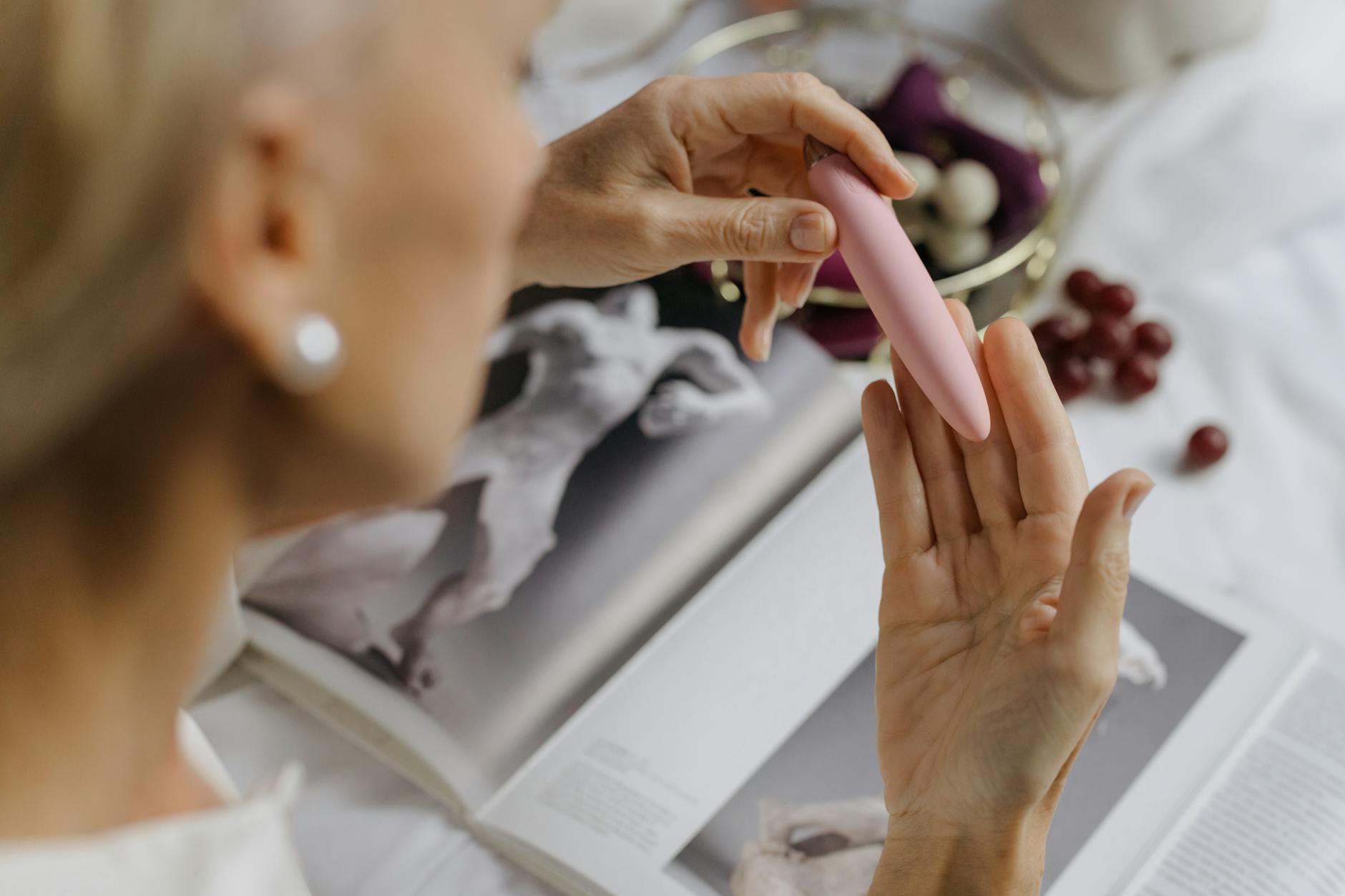
Photo by cottonbro studio on Pexels
Knowing when sensitivity is beyond normal
Some postpartum people experience persistent pain, burning, or severe numbness that doesn't improve by eight to twelve weeks. This can indicate infection, scar tissue complications, or nerve damage. These things are treatable, but they need professional assessment.
See a pelvic floor physical therapist or postpartum-trained gynecologist if:
Pain increases rather than decreases week to week. Numbness hasn't improved by eight weeks. You experience burning that worsens with lubrication or vibrator use. Swelling or discharge returns after improving. You feel a pulling or dragging sensation during stimulation.
Pelvic floor PT can identify tightness or scar tissue restriction that's making the clitoris feel overly sensitive. Treatment usually involves gentle manual release work, and recovery is genuinely fast once you know what's happening.
Moving to pattern 3 when you're ready
After two to three weeks of pattern 1, most people can tolerate pattern 2. After another week or two, pattern 3 might feel comfortable. Each progression should feel like a natural step, not a challenge.
The goal isn't to eventually use the highest settings. It's to use whatever setting feels good. Some people never move beyond pattern 2. Others eventually use patterns 4 or 5. Both are fine. Your clitoris knows what it needs.
When you do advance settings, do it incrementally. Pattern 3 for one week. Pattern 4 the next. Notice what changes: Does orgasm feel fuller? Does it arrive faster? Does something feel uncomfortable or raw? Let sensation guide you, not ambition.
Rebuilding confidence after postpartum touch deprivation
Honestly, one of the biggest shifts postpartum isn't physical. It's psychological. You've spent months being touched constantly. The baby is always on you or needing you. By the time evening arrives, the last thing many people want is another body touching theirs.
Then you try to reconnect with pleasure, and it feels unfamiliar. Your clitoris doesn't respond the way it used to. Your arousal takes longer. An orgasm feels weaker or completely absent. This is partly hormonal, but it's also partly protective. Your nervous system is still in demand mode.
Using The Lem Vibrator as a tool for self-directed pleasure, on your own timeline, with full permission to be slow or even unsuccessful, helps reset that. You're not performing for anyone. You're not on someone else's schedule. You're just exploring sensation at your pace.
Many people find that solo use with the Lem for two to three weeks helps them feel like themselves again before reintroducing partnered intimacy. That matters more than the orgasm itself.
Common questions about postpartum vibrator use
Can I use a lemon clitoral vibrator if I'm breastfeeding?
Yes, absolutely. Nothing from vibrator use enters your bloodstream or breast milk. The only consideration is timing. Breastfeeding suppresses estrogen, which keeps tissue thinner and more sensitive longer. You might need to stay on lower patterns for a longer window than someone who isn't nursing. Weaning or introducing formula can speed up the return to baseline sensitivity, but it's not required.
What if my stitches haven't fully dissolved yet?
Wait. If you have visible stitches or the site still feels tender and scabbed, stay away from the vibrator. Stitches typically dissolve or are removed by six weeks. Full healing of the tissue underneath takes longer, but you don't need to wait for complete healing to start vibrator use. You need the surface area to be intact and the acute swelling to have subsided. If you're unsure, ask your OB or midwife at your six-week checkup.
Does pattern intensity matter more than the type of stimulation?
No. The type of stimulation matters more. Suction-based patterns (like those on The Lem) are gentler on postpartum tissue than vibration-only designs. Vibration creates micro-movements that can feel sharp or irritating when tissue is inflamed. Suction creates pressure without the same friction component. If you're using a lemon sucker vibrator with suction capability, you have an advantage postpartum. If you're using a traditional vibrator, start with the absolute lowest setting and move slowly.
Can I have sex if I can tolerate the vibrator?
Tolerating a vibrator doesn't automatically mean you're ready for penetrative sex or partnered sex. The vibrator is one data point. You're also ready when you feel desire, when your partner is on board, and when you've mentally shifted out of protection mode. Some people use The Lem for three weeks solo, feel comfortable, and then introduce partners. Others need longer. Both timelines are normal.
Will my sensitivity eventually return to baseline?
Mostly yes, but not completely. Postpartum bodies don't fully revert to pre-baby bodies. The good news is that sensitivity typically stabilizes into a new normal by three to four months postpartum if you're not breastfeeding, or when you wean if you are. Some people find their new baseline includes easier orgasms and more sustained pleasure. Others feel a slight shift in what works. Most adapt quickly once hormones stabilize. Expect variation for the first six months, then expect consistency.
What's the difference between normal postpartum sensitivity and something that needs treatment?
Normal postpartum sensitivity feels tender but not painful during gentle stimulation. It improves gradually week to week. There's no burning, no persistent swelling, and no sharp pain. Concerning sensitivity involves pain that increases, burning that worsens with stimulation, or numbness that doesn't improve by eight weeks. Trust yourself. If something feels wrong, get it checked. Pelvic floor physical therapy works fast and usually resolves issues within four to six weeks.
The bottom line
Postpartum recovery isn't linear, and your pleasure recovery isn't either. Using a lemon clitoral vibrator during this time is absolutely possible, but it requires patience and attention to how your body actually feels, not how you think it should feel.
Start low. Move slow. Use lube. Notice what changes week to week. And give yourself permission to skip vibrators entirely if penetration or any touch feels overwhelming. There's no timeline you're behind on. Your body will tell you when it's ready.
When you are ready, The Lem Vibrator's suction-based patterns offer a gentler path back to sensation than traditional vibration. That matters more right now than exploring every setting. Healing comes first. Pleasure follows.